
Starts visit one
Pain
Sort the room out first.
We set up the environment before anything else: quiet space, lighting, pace, and any actual pain in the hands, wrists or shoulders.
What We Treat
A quiet room away from the main therapy floor, if that is what makes a session work. Sensory regulation, motor skills and daily-living skills, one-on-one with a licensed Occupational Therapist, every visit.
What Brings People In
Any of these? That is what the first visit is for.
How This Works
Autism is a difference in how a brain takes in and organizes information. It is not damage and it is not something to be fixed. What can genuinely be hard is the environment around it: fluorescent light, unpredictable noise, tasks designed for a different sensory system, and fine motor demands nobody ever taught you a workaround for.
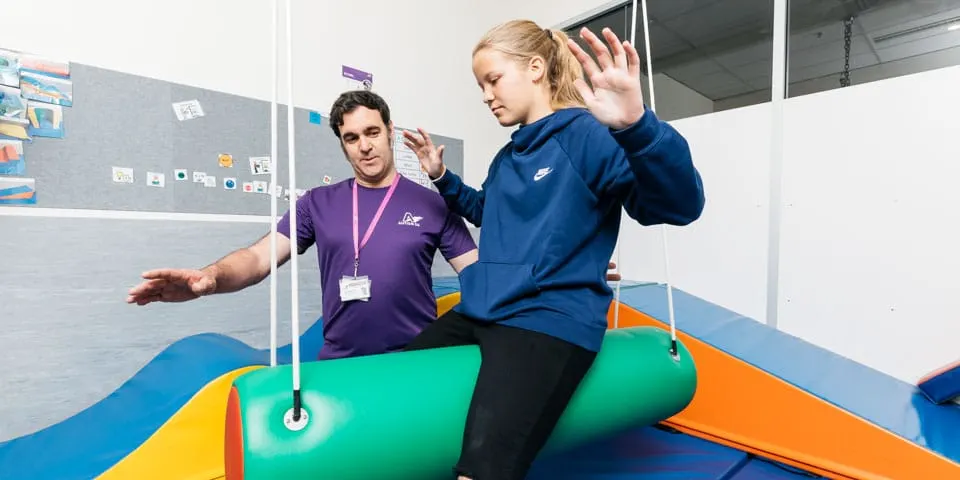
That is where occupational therapy is useful, and only there. We work on sensory regulation, motor and coordination skills, hand and wrist pain, and the daily-living tasks you tell us matter: cooking, dressing, handwriting, typing, getting through a workday. You set the goals. We adjust the room, the pace and the plan around you, including a quiet space away from the main therapy floor when that is what makes the session work.
The Honest Truth
You do not owe anyone an explanation for wanting a day that takes less out of you.
How We Work
You have been managing this yourself for a long time, and managing it well. Asking for practical help with the parts that hurt is not a step backwards. Here is what the four phases look like.
Starts visit one
Pain
We set up the environment before anything else: quiet space, lighting, pace, and any actual pain in the hands, wrists or shoulders.
Once we have a baseline
Prime
Sensory regulation strategies that fit your system, plus range, grip and coordination work, at a pace you set.
Once the basics hold
Perform
Cooking, dressing, handwriting, typing, tools, getting through a shift. The parts of your day you asked us to work on.
Reviewed as you go
Prevent
You leave with the strategies, the setups and a routine that holds without us: that is the endpoint, not a standing appointment.
I must say this clinic is one of the best if not the best medical office I’ve ever been in. Leslie and Jacob have been fantastic throughout my Gabbert Clinic journey as well. I also appreciate Gabbert Clinic accommodating my needs as an autistic adult who needs a quiet room away from the hustle and bustle of the main therapy room. Kudos!
Shared by Allen L. · Google review
Visit 1: you tell us what a session needs to look like for you
Every visit after: that is how it runs, while we work your list
Questions, Answered
No. Autism is not an illness and we are not here to change who you are. Occupational therapy here is practical support for things you have named yourself: sensory regulation, motor and coordination skills, hand and wrist pain, and daily-living tasks like cooking, dressing, handwriting, typing or getting through a workday. If you do not want to work on something, we do not work on it.
Yes. We have done exactly that: a quiet room away from the noise of the main therapy floor, for a patient who told us he needed one. Tell the front desk or your therapist what works for you, whether that is lower light, less noise, no small talk, or the same therapist every visit, and we set it up before you arrive. You never have to justify the request.
You get a plan with an endpoint, not an open tab of appointments. The plan runs through all four phases, Pain, Prime, Perform, and Prevent, and you will always know which phase you are in and what is left. When the goals you set are met, you are done. Come back later if something new comes up, or do not. That is your call.
Book Your Visit
Request a time and a real person from our front desk calls you back to get you scheduled. No phone tree. No ‘someone will reach out.’ Just a plan.
5.0 · 146 Google reviews
Your request goes straight to our front desk
Step 1 of 5
That’s the hard part done. We’ll call during clinic hours to get you on the schedule and tell you what to bring.
Visit Us