
Starts visit one
Pain
Calm the flared joint.
Hands-on work and a joint protection splint reduce the load on the joint while it settles.
What We Treat
Mornings where the joints need warming up before they will cooperate. Jar lids, buttons and door handles that used to be nothing. Arthritis changes the joint, not your ability to keep using it well.
Sound Familiar?
Two or more? Keep reading.
Why It Happens
Arthritis in the hand wears down the smooth cartilage that lets a joint glide, most often at the base of the thumb and in the small joints of the fingers. Without that cushioning, movement that used to be silent becomes something the joint notices, and the muscles around it tighten up in response. That tightening protects the joint in the short term and stiffens it in the long term, which is why the ache often feels worse, not better, after a day of rest.
There is no cure for arthritis, and we will never tell you otherwise. What changes the day-to-day experience of it is how the joint is loaded, protected and moved. A cause-first evaluation looks at which joints are involved and how far along they are, then builds a plan around keeping you doing the things arthritis tries to take away.
The Honest Truth
Nobody regrets starting too early. Read our reviews and you will find people who wish they had come in sooner.
How We Fix It
Every plan has an endpoint. Here is what the four phases look like for hand, finger and thumb arthritis.
Starts visit one
Pain
Hands-on work and a joint protection splint reduce the load on the joint while it settles.
Once the flare settles
Prime
Gentle mobility work keeps the joint moving through the range it still has, and works to reclaim what it lost.
Once the motion holds
Perform
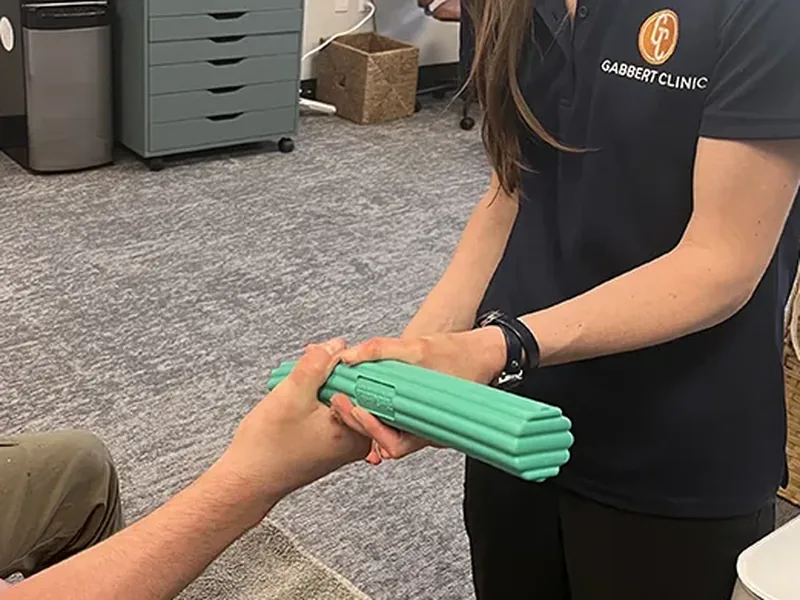
Graded strengthening for grip and pinch, chosen to build muscle around the joint instead of grinding through it.
Before discharge
Prevent
Joint protection techniques and tool adaptations for the tasks that flare it, so arthritis costs you less of your day. That is the endpoint, not another appointment.
Hand is returning to its’ former strength. Ms. Gabbert knows her trade, delivering with ingenuity, science, compassion, and humor.
Shared by Robert F. · Google review
Where you start: joints you warm up before you trust them
Where the plan ends: fewer jars, buttons and days you plan around them
Questions, Answered
Therapy will not reverse arthritis, and we will not tell you it can. What it does well is reduce how much the joint hurts day to day, protect it from the motions that flare it, and keep you doing more with your hands for longer. Many people manage arthritis for years this way. If surgery does become the right answer, we work alongside your surgeon before and after it.
The right motion, dosed correctly, tends to help arthritic joints rather than harm them. A joint that never moves stiffens further. Your therapist finds the amount and type of movement that joint tolerates well, which is different for every person and every joint.
That depends on what the evaluation finds, so we tell you after we look, not before. What you get either way is a plan with an endpoint for this flare. You will know which of the four phases you are in, Pain, Prime, Perform or Prevent, and what is left before you are done. No open tab of appointments.
Book Your Visit
Request a time and a real person from our front desk calls you back to get you scheduled. No phone tree. No ‘someone will reach out.’ Just a plan.
5.0 · 146 Google reviews
Your request goes straight to our front desk
Step 1 of 5
That’s the hard part done. We’ll call during clinic hours to get you on the schedule and tell you what to bring.
Visit Us