
Starts visit one
Pain
Calm the irritated joint down.
Hands-on work and, if needed, a small splint or buddy strap so the finger can rest without you losing the rest of your hand.
What We Treat
One finger, doing all the complaining. Typing, texting, buttoning a shirt, all of it routed through a joint that now aches, catches or swells before you even notice you used it.
Sound Familiar?
Two or more? Keep reading.
Why It Happens
A finger is a small, crowded space: tendons, pulleys, ligaments and joint capsule all packed into something the width of a pencil. Pain in a single finger can come from a tendon that catches on its pulley, a joint lining that is irritated, a ligament strained in a fall, or simple overuse from a repetitive grip you make a hundred times a day without thinking about it. Two fingers can hurt for two completely different reasons, and treating the wrong one wastes your time.
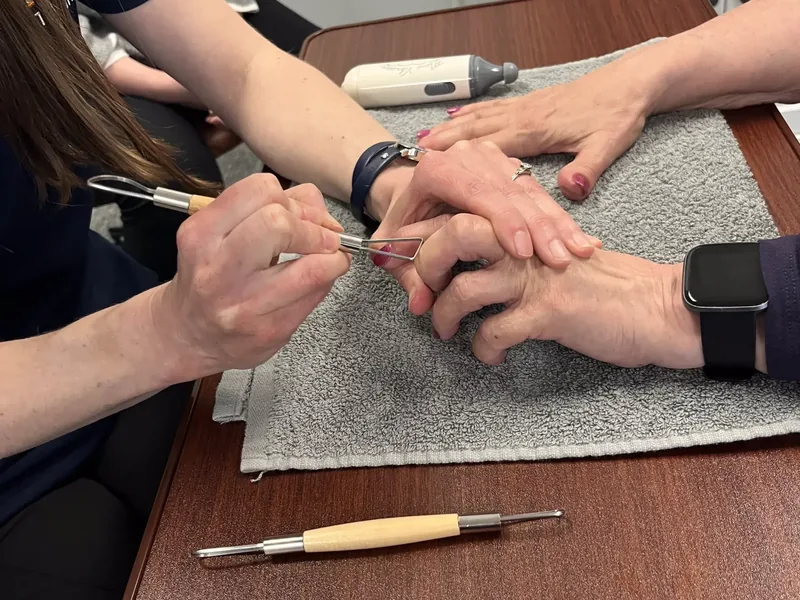
That is why a finger that hurts gets a real evaluation before it gets a plan. We find which structure is actually irritated and what is loading it, then build the plan around that, not around a guess. Your hands are how you work, hold your kid and sign your name. You do not get to shelve one finger and wait it out.
The Honest Truth
Nobody regrets starting too early. Read our reviews and you will find people who wish they had come in sooner.
How We Fix It
Every plan has an endpoint. Here is what the four phases look like for finger pain.
Starts visit one
Pain
Hands-on work and, if needed, a small splint or buddy strap so the finger can rest without you losing the rest of your hand.
Once the pain settles
Prime
The joint and its tendon glide fully again, without the catch or the stiffness you started with.
Once the motion holds
Perform
Graded strengthening for grip and pinch, so that one finger can pull its weight again.
Before discharge
Prevent
We adjust the grip, tool or repetitive habit that loaded that finger in the first place. That is the endpoint, not another appointment.
Gabbert Clinic Leslie Harvell, OTR/L, CHT I want to express my heartfelt appreciation for Leslie at Gabbert Clinic. After struggling for months with severe, persistent pain in my thumb and wrist, I was honestly losing hope. From my very first session, Leslie’s expertise and dedication brought immediate relief to a very complexed injury and set me on a path to a continual and progressive recovery. Leslie’s thoughtful approach and truly personalized exercises have made a difference I can only describe as miraculous. She took the time to explain every step of my treatment, tailoring everything specifically to my needs. Her professionalism, patience, knowledge and positive attitude made each visit productive and motivating. Thanks to Leslie, I feel more confident managing my condition and am regaining function I thought I had lost forever. I am deeply grateful for her outstanding care and the genuine compassion she brings to her work. I highly recommend Leslie and the entire Gabbert Clinic team to anyone seeking expert, individualized therapy in Vancouver, WA. Warmest regards, Frederick Richardson
Shared by Frederick R. · Thumb and wrist pain
Where you start: one finger you have quietly worked around for weeks
Where the plan ends: a hand you use without thinking about it again
Questions, Answered
Not usually. A hands-on evaluation can identify most sources of finger pain without an X-ray or MRI. If something in your history or exam suggests we should rule out a fracture or a more serious issue, we will tell you and help you get it, but most finger pain does not require imaging before starting.
Total rest is rarely the answer, and a finger held perfectly still tends to stiffen. The Pain phase comes first for a reason: we calm the joint down and, if it needs protecting for a while, we splint it, rather than asking you to guess at how much to use it on your own.
That depends on what the evaluation finds, so we tell you after we look, not before. What you get either way is a plan with an endpoint. You will know which of the four phases you are in, Pain, Prime, Perform or Prevent, and what is left before you are done. No open tab of appointments.
Book Your Visit
Request a time and a real person from our front desk calls you back to get you scheduled. No phone tree. No ‘someone will reach out.’ Just a plan.
5.0 · 146 Google reviews
Your request goes straight to our front desk
Step 1 of 5
That’s the hard part done. We’ll call during clinic hours to get you on the schedule and tell you what to bring.
Visit Us